EXECUTIVE SUMMARY
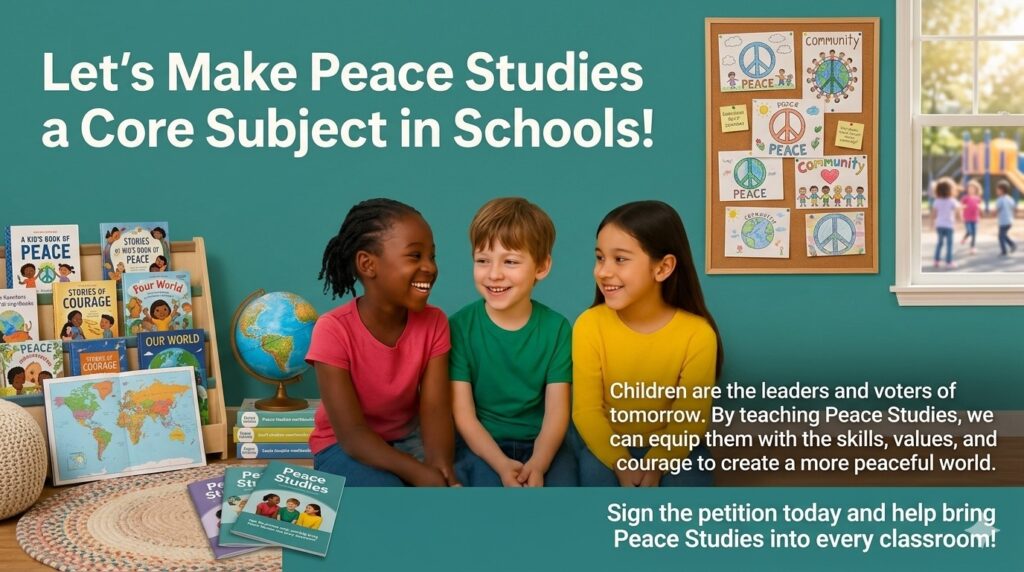
The International Children’s Peace Network (ICPN) proposes that Peace Studies be embedded as a core component of the national curriculum across primary and secondary phases. The aim is to equip children with practical competencies in conflict resolution, empathy, media and information literacy, intercultural understanding, civic responsibility, and restorative practice – all of which directly support safer schools, improved attainment, and stronger social cohesion.
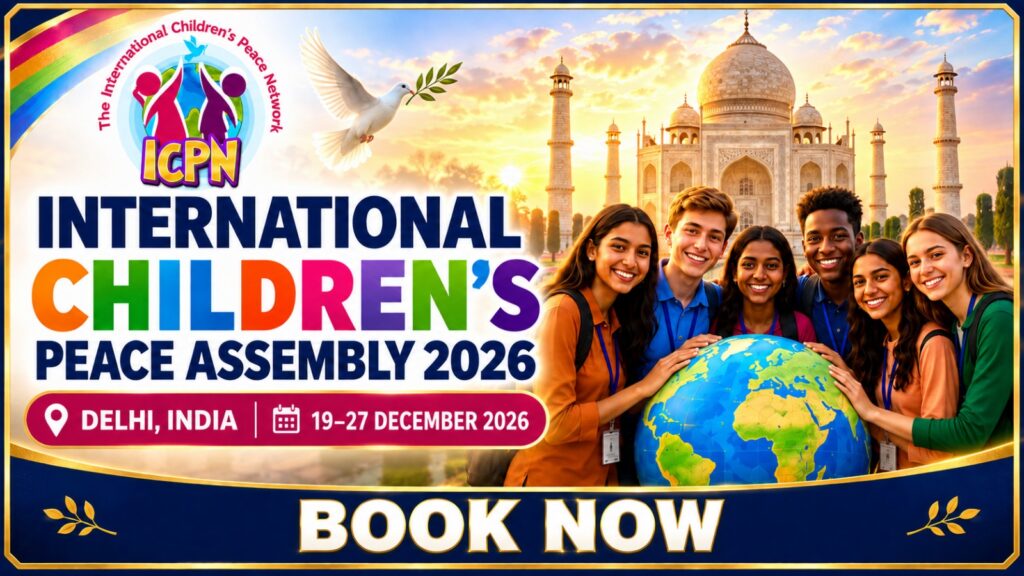
The International Children’s Peace Network (ICPN) is uniquely placed to deliver this with government: it runs school-facing programmes, youth leadership and interfaith dialogue activities, teacher training seminars, and national platforms (such as the International Children’s Peace Assembly which launched the Children’s Peace Declaration in the House of Lords this summer). ICPN’s partnerships – Rotary International, various faith and non-faith networks, and education organisations – ensure national reach and multi-stakeholder credibility. In pursuance of this objective, we request urgent meetings with the DfE (and relevant bodies in the UK and Europe) to discuss piloting and scaling.
THE CASE FOR PEACE STUDIES
Educational and Social Outcomes
You can sign the petition using this link…
- Behaviour and safeguarding: Evidence across UK schools shows that restorative approaches and peer mediation reduce exclusions, bullying, and teacher workload while improving relationships and attendance.
- Attainment and wellbeing: Social-emotional learning and values-based education improve readiness to learn, concentration, and classroom climate – indirectly raising attainment.
- Civic readiness: With increasing youth civic participation (and ongoing debate around voting at 16), Peace Studies prepares students for informed, respectful democratic engagement.
- Countering misinformation and extremism: Structured media literacy and dialogue skills help young people navigate polarisation, harmful online content, as well as mis/disinformation.
- It supports the DfE’s focus on behaviour, attendance, safeguarding, character education, RSHE/PSHE, and citizenship.
- It complements the government’s Prevent programme and EQUaL ambitions by building resilience, inclusion, and critical thinking rather than fear-based compliance.
- It is consistent with Ofsted’s emphasis on personal development, Spiritual, Moral, Social and Cultural development (SMSC), and the wider curriculum.
- In Schools: interactive workshops, teacher training, student-led Peace Clubs.
- Peace Debates and Leadership: regionalandnational debates mentored by Rotary Peace Fellows and community leaders.
- Interfaith and Inclusion Events: Annual Interfaith Peace Gathering; Peace in the Family
- International Children’s Peace Assembly (House of Lords, London, August 2025, planning for 2026 underway): a flagship platform amplifying youth voice.
- Children’s London Peace Marathon (June 2026): public mobilisation on peace and inclusion.
- Partnerships and Community Action: Rotary International, Women’s Interfaith Network, Universal Peace Federation, and many others – the list of stakeholders is growing.
- Recognition and Legacy: Peace Ambassador Awards; a developing Peace Curriculum Framework for Schools (2025–2026).
- School access and partnerships across diverse regions via Rotary International and networks.
- Delivery experience with teacher Continuing Professional Development, assemblies, debates, and student projects.
- Non-partisan convening power to bring together government, schools, civil society, and families
- Cultural and interfaith literacy to reach communities often under-served by national initiatives.
- Ready-to-run pilots and a national youth platform to showcase outcomes / build momentum.
- Core Strand within PSHE/Citizenship (fastest route)
- Define Peace Studies competencies and mapped outcomes across Key Stages 1–4.
- Publish statutory guidance for delivery and assessment via PSHE/citizenship.
- Commission DfE-endorsed CPD (Continuing Professional Development) and resource packs (leveraging ICPN + partners).
- Standalone Subject Pilot (evidence-building route)
- Pilot Peace Studies as a timetabled subject in a representative set of schools/Multi Academy Trusts (MATs) for 12–18 months.
- Independent evaluation (behavioural data, attendance, exclusions, climate surveys, attainment links).
- Whole-School Restorative and Peace Culture
- Incentivise through character education funding and recognition/awards.
- Curriculum Pack mapped to PSHE/Citizenship and SMSC (KS1–4).
- Teacher CPD (introductory + coaching cycles).
- Student Leadership (Peace Clubs; peer mediators; debates; service learning).
- Community Linkages (Rotary clubs; interfaith partners; local councils).
- Monitoring and Evaluation (baseline + termly data on behaviour, attendance, climate, pupil voice; qualitative case studies).
- Showcase Platforms (Children’s Peace Assembly; DfE/Ofsted engagement days).
You can sign the petition using this link…